Tirzepatide is sold as a research peptide in freeze-dried form, which means it needs to be mixed into a liquid before it can be used in a study. This guide covers what’s been published about tirzepatide dosing, how that mixing (reconstitution) is generally done, how to store it properly, and mistakes that are easy to make along the way. It’s written to explain the science in plain terms — not as instructions for using it on a person or animal.
Dosing in the Research Literature
Tirzepatide is unusual compared to some newer peptides because it’s already an approved prescription medication (sold as Mounjaro and Zepbound), so there’s a well-documented dosing history to reference — though that history describes a supervised medical product, not a general-use guideline.
- The approved product is dosed once weekly, starting at 2.5 mg — a dose used only to help the body adjust, not for its effect — and increased in 2.5 mg steps roughly every 4 weeks, up to a maximum studied and approved dose of 15 mg.
- Clinical trials (the SURPASS and SURMOUNT programs) mainly evaluated the 5 mg, 10 mg, and 15 mg maintenance doses, comparing outcomes at each level.
- The gradual step-up schedule exists specifically to reduce gastrointestinal side effects — it’s a tolerability strategy, not evidence that a particular starting point or increment is universally “correct.”
- A lot of published research specifically compares outcomes across these dose levels, since higher doses generally showed larger effects on blood sugar and weight, alongside more frequent side effects.
These numbers describe a specific, medically supervised product and its approved use — they aren’t a dosing guide for research peptide material. Any dose used in a lab setting (in vitro, cell-based, or animal research) should be determined independently based on the specific study, not copied from the approved drug’s schedule.
Reconstitution Step by Step
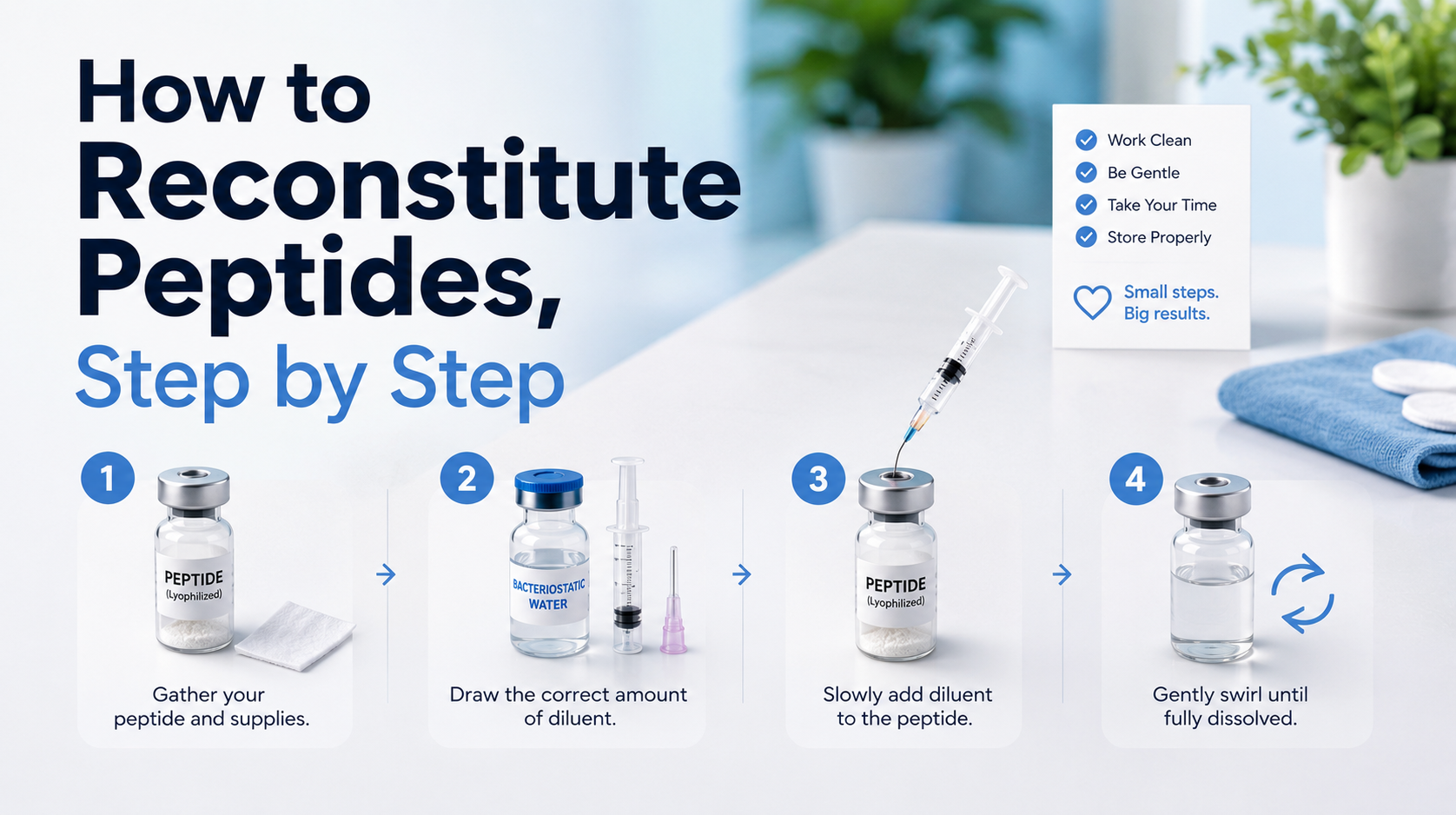
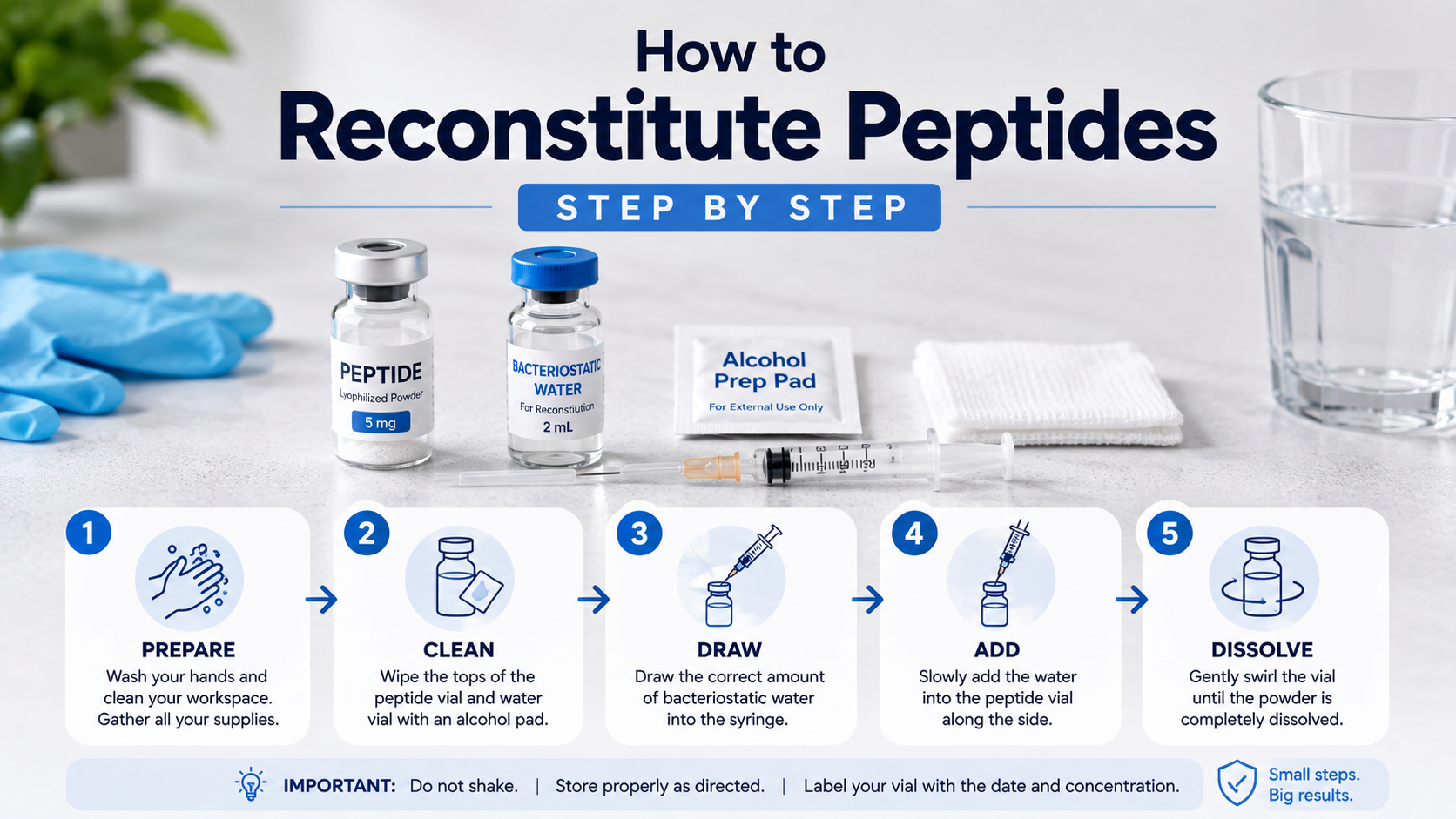
“Reconstitution” means turning the freeze-dried peptide back into a liquid at a known strength, so it can be measured accurately. Here’s generally how that’s done:
- Set out your materials first: the vial of peptide, bacteriostatic water, alcohol swabs, and a syringe.
- Clean the working surfaces: an alcohol swab across the vial stopper, plus a tidy bench to work on.
- Calculate the resulting strength: peptide weight divided by liquid volume. A 10 mg vial mixed with 2 mL comes out to 5 mg per mL; using 5 mL instead brings it down to 2 mg per mL.
- Draw the correct volume of water into your syringe, tapping out any air before moving on.
- Direct it along the vial’s inner wall rather than straight onto the powder — this cuts down on foaming.
- Dissolve it by swirling, not shaking, since shaking risks breaking down the peptide structure.
- Check the solution visually: it should be clear; cloudiness or visible particles mean it shouldn’t be used.
- Label the vial immediately with the date and the strength you calculated.
- Place it into storage right away — see the notes below.
Storage and Stability
Before mixing: Keep it frozen, dry, and out of the light until you’re ready to use it. Even if the vial looks fine, sitting out in heat or light before mixing can shorten its usable life.
After mixing: Once it’s in liquid form, it’s considerably less stable. The usual approach is to keep it refrigerated (not frozen, unless testing specifically supports that), protected from light, and to use it within a defined window based on the specific setup.
Avoid freezing and thawing repeatedly: Each freeze-thaw cycle adds more damage. If several doses will be needed over time, splitting the solution into smaller portions right after mixing helps avoid this.
Don’t rely on generic timelines: Shelf-life figures you find online are a starting point, not a guarantee — actual stability depends on the specific diluent, concentration, and storage conditions used.
Handling Errors to Avoid
- Using the wrong liquid. Tap water or regular saline isn’t the same as sterile bacteriostatic water, and can introduce contamination or affect stability.
- Shaking instead of swirling. This is one of the most common ways people accidentally damage the peptide.
- Squirting liquid straight onto the powder. This can cause foaming and stress the peptide before it’s even dissolved.
- Leaving it out at room temperature too long. It degrades faster than it looks, even if the solution still appears clear.
- Freezing and thawing repeatedly. Each cycle compounds the damage from the last.
- Not labeling vials clearly. It’s easy to lose track of strength and age without clear notes.
- Skipping the certificate of analysis. Always worth checking what’s actually in a batch before using it.
- Treating the approved product’s dosing schedule as a research or personal guide. Those numbers come from a specific, medically supervised product — not a general-purpose reference for research use.
Research Use Disclaimer
Tirzepatide is approved by the FDA under the brand names Mounjaro and Zepbound, for specific medical indications, when prescribed and dispensed as those approved products. Tirzepatide sold separately as a research peptide is a different, non-prescription product — not the approved medication, not for human or animal consumption, and not a drug, food, supplement, or cosmetic in that form.
Everything in this guide is meant for general educational purposes, based on what’s publicly documented about the approved product and published research. None of it is medical advice, a treatment plan, or instructions for using tirzepatide on a person or animal.
Using research-grade tirzepatide outside of a legitimate research setting, or in place of the approved prescription product, isn’t something we support or recommend.