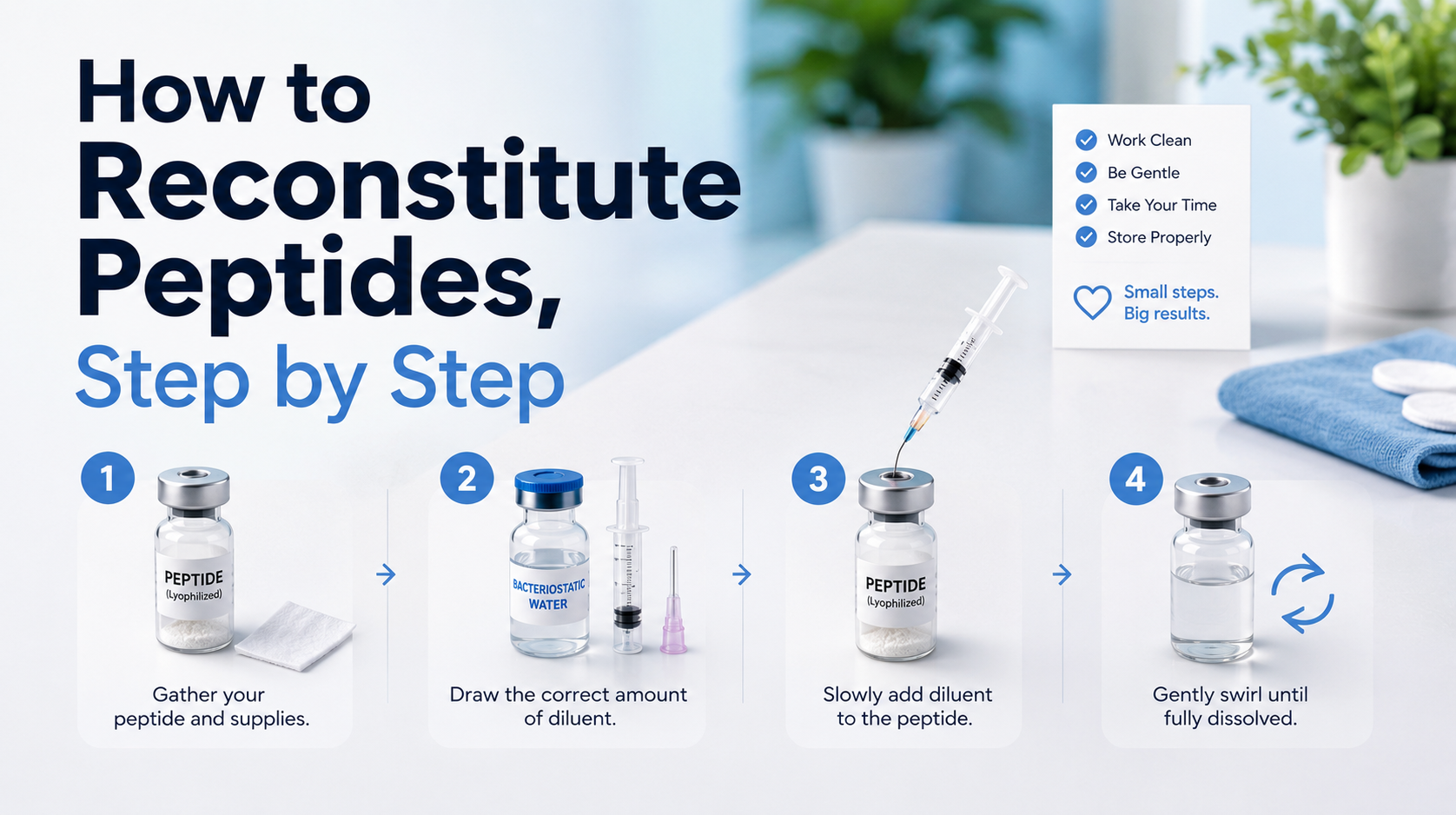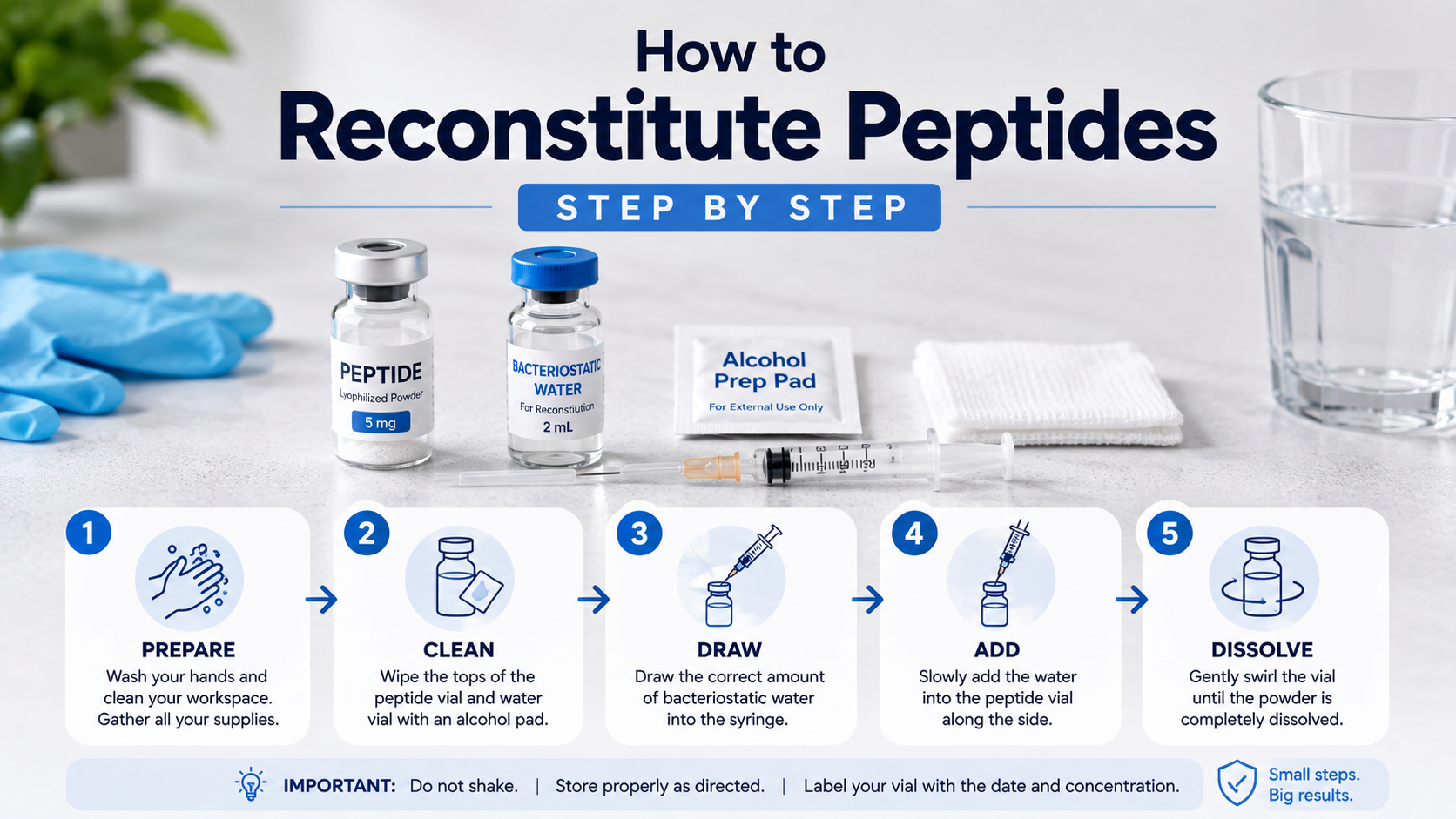
The math behind mixing a peptide looks easy once it’s written down — but it’s also where small mistakes sneak in. Get one number wrong, and every measurement you take from that vial afterward will be wrong too. This guide covers why the ratio matters, what affects it, some worked examples for different vial sizes, and how to turn a ratio into an actual amount you draw up.
Why the Ratio Matters
The same peptide vial can end up at all kinds of different strengths, depending only on how much water you add. There’s no “built-in” right answer — it’s a choice based on what a study needs.
That choice matters a lot, because everything after it depends on getting it right. If the strength isn’t worked out (and written down) correctly, every measurement taken from that vial afterward will be off by the same amount — even if every other step was done carefully. Getting the ratio right, and writing it down the moment you mix it, is what keeps every later measurement accurate and easy to check.
The Variables That Drive It
A few things go into choosing how to mix a vial:
- How much peptide is in the vial (mg). This doesn’t change — it’s printed on the vial and confirmed by the certificate of analysis.
- How much water you add (mL). This is the part you actually control, and it’s what sets the final strength.
- How precise the measurement needs to be. If you need to measure out something very small, a weaker mix (more water) usually makes that easier to do accurately.
- How much the vial can hold. Every vial has a limit on how much liquid fits, which caps how weak you can make the mix.
- What you’re measuring with. A regular syringe is marked in milliliters, but a lot of researchers use insulin-style syringes marked in “units” instead — usually 100 units equals 1 mL. That changes how you turn a strength into a number on the syringe.
Worked Examples by Vial Size
These are just examples to show how the math works — not a recommendation for any specific vial or ratio.
A 2 mg vial:
- Add 1 mL of water → 2 mg per mL (2,000 mcg per mL)
- Add 2 mL of water → 1 mg per mL (1,000 mcg per mL)
A 5 mg vial:
- Add 1 mL of water → 5 mg per mL
- Add 2 mL of water → 2.5 mg per mL
- Add 3 mL of water → about 1.67 mg per mL
A 10 mg vial:
- Add 1 mL of water → 10 mg per mL
- Add 2 mL of water → 5 mg per mL
- Add 3 mL of water → about 3.33 mg per mL
Turning that into units on a syringe: Say you mix a 5 mg vial with 2 mL of water, giving you 2.5 mg per mL (2,500 mcg per mL). To find out how many units equal, say, 250 mcg: divide 250 by 2,500, which gives you 0.1 mL. Multiply that by 100, and you get 10 units. That’s the whole trick — go from strength, to volume, to units.
Turning a Ratio into a Draw
Once you know a vial’s strength, getting to an actual measurement just takes two simple steps:
Amount to draw (mL) = what you want (mg) ÷ strength (mg per mL)
Units on a syringe = amount to draw (mL) × 100
Example: say a vial is mixed to 2 mg per mL, and you need 0.4 mg. Divide 0.4 by 2, and you get 0.2 mL. Multiply that by 100, and that’s 20 units.
A few habits make this kind of math safer:
- Write the strength on the vial as soon as you mix it, so you’re always working from a number that’s actually written down — not guessed or remembered.
- Use a calculator, not mental math, especially when you’re switching between mg, mcg, mL, and units in the same problem.
- Get someone else to check your math when you can, especially for a new setup or an unfamiliar strength.
- Check what kind of syringe you’re using. Not every syringe is marked the same way — assuming the wrong one is an easy way to be way off without noticing.
Research Use Disclaimer
This guide covers general mixing and measurement math for lab and preclinical research only. It’s not medical advice, a treatment plan, or instructions for working out a dose for a person or animal outside of a real research study. The peptides mentioned here aren’t approved by the FDA or any other health authority for use in people or animals, and none of them are drugs, foods, supplements, or cosmetics in their research form.
Research peptides should always come from a supplier that can show you a certificate of analysis for the specific batch. Using any research peptide outside of a real research setting isn’t something we support or recommend.