TB-500 is typically supplied as a freeze-dried peptide, the same way BPC-157 and most other research peptides are. But when it comes to dosing, TB-500 is in an even less settled spot than some of the other compounds covered in this series. This guide walks through how dosing shows up (and doesn’t) in the research literature, how reconstitution is generally done, how to store it, and a few handling notes — written to explain the science in plain terms, not as instructions for using it on a person or animal.
Dosing in Research
TB-500’s dosing picture is thinner than it might appear from how confidently it’s discussed online.
- Most of what’s published on TB-500 comes from animal studies — rodent and other preclinical models — dosed on a body-weight basis, generally in the microgram-to-low-milligram-per-kilogram range depending on the specific study and delivery method.
- Some of the “human dosing” information that circulates for TB-500 actually traces back to broader thymosin beta-4 clinical research — a related but distinct body of work — rather than to trials on TB-500 itself.
- Administration routes examined in the animal literature are mostly injection-based, with some wound-healing studies using topical or localized application instead.
The takeaway: there is no established, publicly validated human dosing standard for TB-500 — not an approximate one, and not a well-documented one. Any specific dose referenced online as “the TB-500 dose” is extrapolated from animal research, borrowed from separate thymosin beta-4 studies, or simply repeated from other unverified sources. Any dose used in a lab setting should be determined independently based on the specific study, species, and protocol.
Reconstitution Step by Step
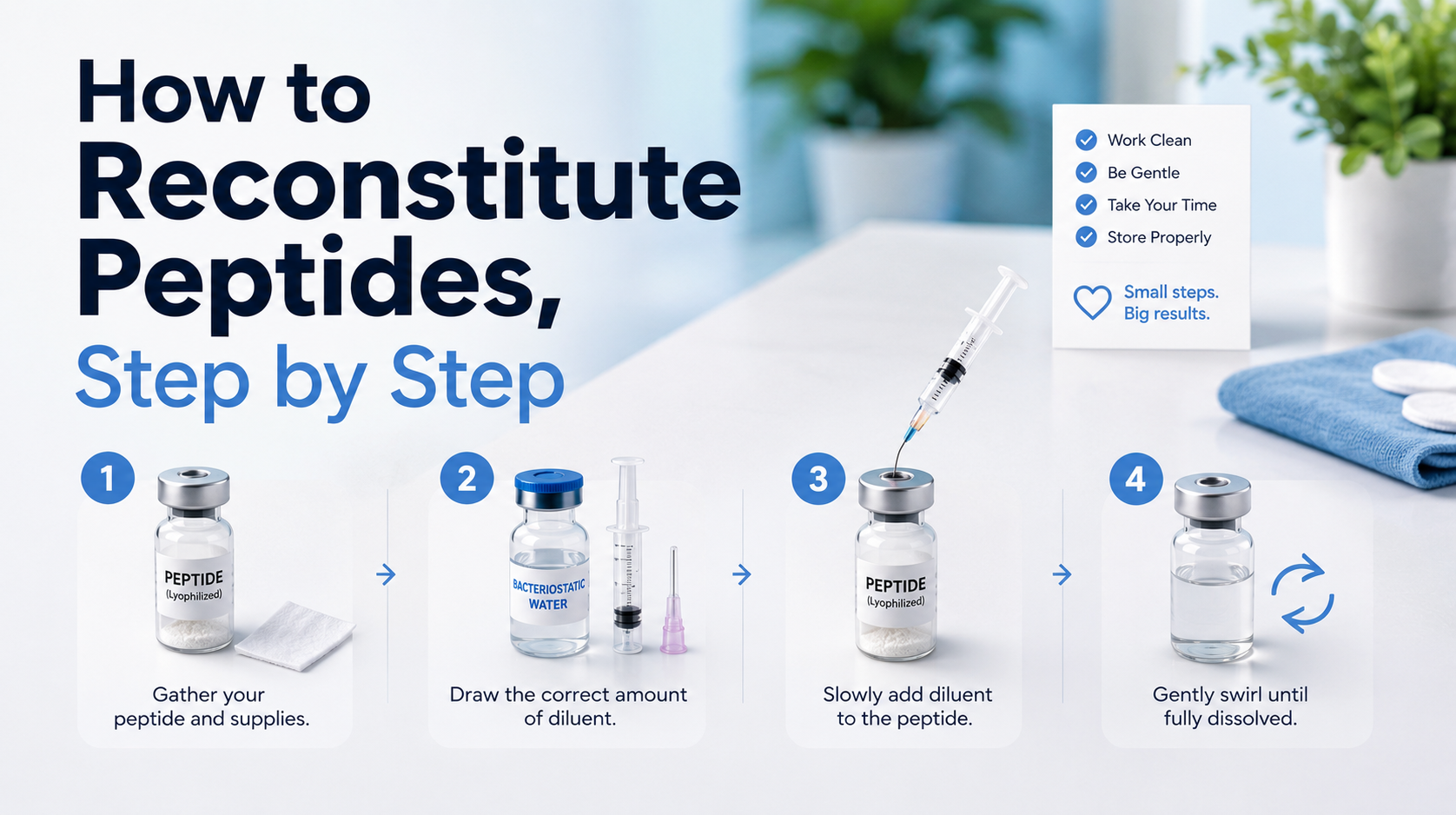
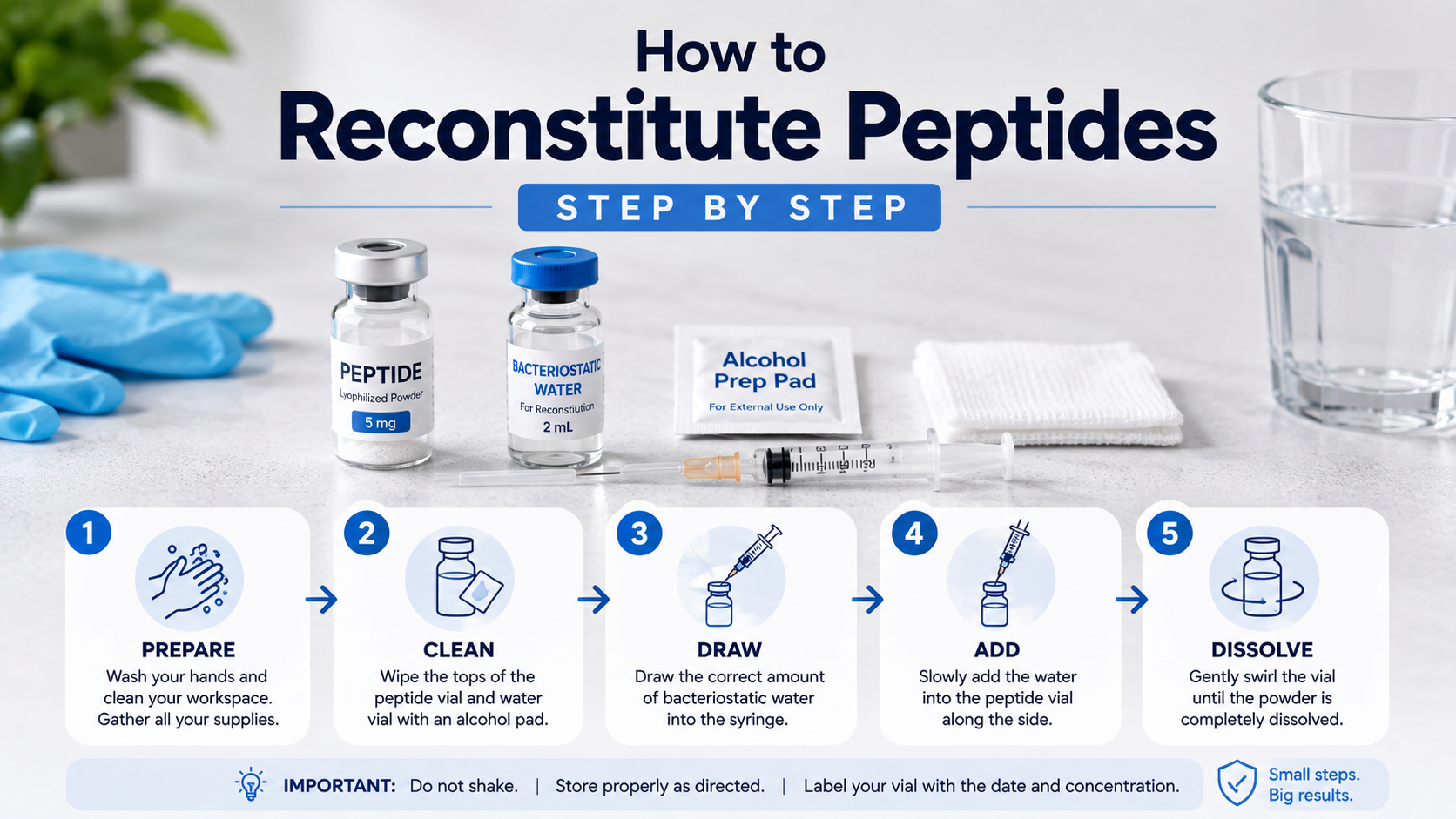
“Reconstitution” means turning a freeze-dried peptide back into a liquid at a known strength so it can be measured accurately. Here’s generally how that’s done:
- Get your supplies ready: the peptide vial, a bottle of bacteriostatic water, alcohol swabs, and a clean syringe, all within reach before you start.
- Wipe down before you open anything: swab the vial’s rubber stopper and clear off your work surface.
- Calculate the concentration: divide the peptide amount by the liquid volume. Mixing a 5 mg vial with 2 mL of water gives 2.5 mg per mL; using 5 mL instead brings that down to 1 mg per mL.
- Draw the water into your syringe, clearing out any air pockets before moving on.
- Let it flow down the vial wall rather than hitting the powder directly — this keeps foaming to a minimum.
- Rotate the vial gently to dissolve it. Shaking is rough enough to damage the peptide, so stick to swirling.
- Examine what you’ve made: it should be clear, with nothing cloudy or particulate floating in it.
- Note the date and concentration on the label right away.
- Move it into storage without delay, following the guidance below — and don’t assume TB-500 behaves like BPC-157 just because the mixing steps are similar.
Storage and Stability
Before mixing: freeze-dried TB-500 is generally kept frozen, dry, and away from light until it’s needed. As with most peptides, the freeze-dried form is far more stable than the reconstituted solution, which is why suppliers ship and store it that way.
After mixing: once in liquid form, TB-500 is considerably less stable and is generally kept refrigerated, protected from light, and used within a defined window based on the specific protocol. Published shelf-life figures vary by diluent and concentration, so they should be treated as a starting point rather than a guarantee.
Avoid repeated freeze-thaw cycles. Each cycle adds some degree of degradation. Splitting a solution into smaller portions right after mixing helps avoid repeated thawing if multiple uses are planned.
Don’t assume TB-500 behaves like BPC-157. The two get grouped together constantly, but they’re structurally different peptides, and stability data for one shouldn’t be assumed to apply to the other without checking the specific research or supplier documentation.
Handling Notes
- Using the wrong liquid. Tap water or regular saline isn’t the same as sterile bacteriostatic water, and can introduce contamination or affect stability.
- Shaking instead of swirling. This is one of the most common ways a peptide gets damaged during reconstitution.
- Squirting liquid straight onto the powder. This can cause foaming and stress the peptide before it’s even fully dissolved.
- Treating an animal-study dose as a human reference point. Doses reported in the literature are scaled to specific animal models — they don’t convert cleanly to a “safe” or “effective” human amount.
- Skipping the certificate of analysis. Always worth checking what’s actually in a batch before using it, particularly for a compound with as much unregulated market activity as TB-500 has.
- Not labeling vials clearly. It’s easy to lose track of strength and age without clear notes, especially across multiple batches or studies.
Research Use Disclaimer
TB-500 is not approved by the FDA or any other health authority for any use, and it is not a drug, food, supplement, or cosmetic. It’s banned by the World Anti-Doping Agency for use in competitive sports. In 2023, TB-500 (along with BPC-157) was placed on an FDA list of substances considered too high-risk for pharmacy compounding; HHS Secretary Robert F. Kennedy Jr. announced their removal from that list earlier in 2026, and on July 24, 2026, the FDA’s Pharmacy Compounding Advisory Committee — whose roster had recently added several members with ties to the peptide industry — voted on whether to allow TB-500 in compounded prescriptions alongside BPC-157. The vote is non-binding and doesn’t change TB-500’s current unapproved status. Everything in this guide is meant for general educational purposes, based on what’s published in the available research literature. None of it is medical advice, a treatment plan, or instructions for using TB-500 on a person or animal.
Blueprint Sciences supplies TB-500 with a certificate of analysis for every batch. You can view the current listing here: TB-500 – Research Use Only.
Using TB-500 outside of a legitimate research setting isn’t something we support or recommend — the evidence needed to support a safe, established human dose simply isn’t there yet.